
The horrific attack by Hamas on Israel on October 7, 2023 made one thing abundantly clear for stakeholders, decision makers, and observers of the region: everything has changed. In this piece, Eric Schorr explores a potential way forward from the dark situation the region currently finds itself in through the unprecedented Abraham Accords, and a proposal for a multinational Arab-led security force in Gaza. Such a force, Schorr proposes, would provide security and stability for both Israel and the Palestinian people, and help break the cycle of violence that blights the region.
The Gaza Strip has long been a focal point of tremendous tension and instability in the Middle East, exemplifying the ongoing Israel-Palestinian conflict’s most enduring challenges. Decades of strife, violence, and recurring humanitarian crises have long cast a shadow over any prospects for a peaceful resolution between the two sides. After Israel’s disengagement and withdrawal from Gaza in 2005, a tacit nod to international pressure, there was widespread hope that a self-governed, fully Palestinian territory could potentially reach détente, if not true peace, with its neighbour Israel. However, following Hamas’ electoral success in 2006 and its violent takeover of the territory in 2007, any such hopes were left in the exhaust dust of thousands of rockets fired by Hamas and other armed groups at civilian and military targets in southern Israel. This, in turn, prompted Israel to implement a blockade of Gaza, further complicating the situation for the territory. Despite this, more diplomatic policies were enacted in the form of humanitarian aid, economic assistance, and even a worker-exchange program, all in a tragically futile attempt to control and contain Hamas, and maintain a high level of ‘deterrence’ in order to prevent attacks on Israeli citizens. The events of October 7, 2023 horrifically shattered the status quo, proving such deterrence to have been little more than fairy-tale.
At the time of writing, Israel and its military have commenced a ground invasion of the Gaza Strip, with the stated goal of destroying Hamas. How Israel will achieve this goal is unknown at this time, as is the timeline for such an operation. Still, even if Israel does succeed in its mission to destroy Hamas (and even only militarily) what is preventing the previous status quo and historic cycles of violence from simply returning? If Israel has no intention or desire to occupy the Gaza Strip in order to prevent a rebuilding of Hamas’ military infrastructure, what alternative is there?
This article introduces a proposal to leverage the historic Abraham Accords – an unprecedented diplomatic situation – to create a multinational Arab-led security force dedicated to addressing the complex security dynamics within the Gaza Strip and future implications for Israel. At the core of this initiative lies a critical question: What could such a force mean for regional security and, in particular, the security of the State of Israel and the security of the Palestinian people? Such an unconventional approach is therefore an attempt at fundamentally redefining the landscape of regional security, promoting stability, fostering cooperation among neighbouring Arab nations, and alleviating the humanitarian crisis in Gaza.
In the following sections, I dive into the rationale behind establishing such a force, its potential benefits and challenges, and the broader implications for regional stability and conflict resolution. While this proposal faces significant hurdles, it represents a pathway towards addressing the multifaceted challenges of the Gaza Strip, ensuring the safety of Israel and its citizens, the safety and security of the Palestinian people, and ultimately, achieving a more secure and prosperous Middle East.
Rationale
The concept of a multinational Arab security force represents a ground-breaking departure from traditional international intervention. It is founded on the principle of regional ownership, whereby neighbouring Arab states assume collective responsibility for security issues in Gaza, in close coordination with Israel. The foundation for this concept is rooted in the Abraham Accords, the ground-breaking and historic series of agreements that ushered in a new era of diplomacy and cooperation in the Middle East. The Accords therefore have the potential to play a pivotal role in the establishment of a security force for Gaza. Although the Accords primarily focused on normalizing relations between Israel and several Arab and Muslim-majority countries, they have much broader regional implications that can be harnessed to address the complex security dynamics between Gaza and Israel as well.
The Abraham Accords, signed in 2020, represented a historic departure from traditional diplomatic norms in the Middle East, having successfully normalized relations between Israel and several Arab and Muslim-majority countries, without the (until then assumed required) addressing of the Israeli-Palestinian issue. A key feature of the Accords is the principle of regional ownership, one in which Arab nations have demonstrated their commitment to taking responsibility for regional security and stability. This paradigm shift is significant as it showcases a willingness among neighbouring Arab states to actively engage in addressing long standing regional challenges, including those within the Gaza Strip. The newfound sense of regional ownership forged through the Abraham Accords can thus serve as a catalyst for addressing the complex security dynamics between Gaza and Israel, and further underscores the importance of regional stakeholders coming together to collectively tackle the multifaceted issues in Gaza itself. This willingness to engage diplomatically with Israel, traditionally a contentious issue in the Arab world due primarily to the Israel-Palestinian conflict, has now opened doors for broader regional engagement, including efforts to create a hypothetical multinational Arab security force.
The establishment of open diplomatic channels as a result of the Abraham Accords is a critical aspect that can facilitate discussions and negotiations regarding the formation and operation of a multinational Arab security force in Gaza. These channels provide a structured and trusted platform for ongoing dialogue, allowing relevant parties to come to the table to address security concerns in a constructive manner. The Accords have also laid the groundwork for a more open and cooperative environment where frank and productive discussions about the security situation in Gaza can take place. Moreover, the existence of these diplomatic channels can help build trust among regional actors, which is essential for any successful security force initiative. Trust-building is a complex process, and the Accords’ diplomatic mechanisms can contribute to overcoming historical mistrust and animosities, which are often significant barriers to collaborative security efforts.
The Abraham Accords’ emphasis on regional cooperation and security principles also aligns well with the goals of a proposed multinational Arab security force for Gaza. The Accords recognize that regional stability is in the interest of all parties involved, and this understanding can extend to addressing the current security challenges in the Gaza Strip. The primary purpose of such a regional security force in Gaza is the continued enforcement and guarantee that the territory is completely free of any independent military or armed power, Israeli or Palestinian. Following the October 7, 2023 attacks on southern Israel, the Israeli security establishment has stated it is fully committed to disarming Hamas and all militant factions in the Gaza Strip. Any proposed security force would consequently be primarily tasked with ensuring that no weapons make their way into Gaza moving forward, and that any dual-purpose materials be closely monitored for violations. Such a force would also ensure the territorial integrity of Gaza.
The cooperative framework fostered by the Accords will also contribute greatly to conflict prevention. By enhancing regional security coordination, not only between Israel and Arab states but also within Gaza itself, the Accords provide an additional platform for crisis management and de-escalation efforts, which can significantly reduce the likelihood of hostilities erupting in the region more broadly, ultimately benefiting both Gazans and Israelis living near the border. Furthermore, the Accords’ normalization of relations and economic cooperation can provide practical avenues for improving humanitarian conditions in Gaza. The economic benefits of regional cooperation can contribute to the alleviation of suffering and address the dire living conditions in the territory, which should be another central objective of any security force operating in the region. The increased flow of goods, services, and investments can enhance the quality of life for Palestinians in Gaza and foster a more stable environment overall.
Disarmament of the Gaza Strip
The paramount objective of any multinational Arab security force operating in the Gaza Strip must be the complete disarmament of the territory. Israel will accept nothing less as its baseline for negotiation and approval of such an initiative. This disarmament is essential to establish a secure and stable environment that fosters regional peace and safeguards against the potential for the dual use or manipulation of materials and equipment for hostile purposes.
Complete disarmament is vital for several reasons. Firstly, it prevents the further militarization of Gaza, which has seen a proliferation of arms and military capabilities over the last several decades. This proliferation has created an environment characterized by armed factions and the continuous potential for conflict escalation. Full disarmament therefore contributes significantly to regional stability by reducing the likelihood of new or renewed hostilities and conflicts; a demilitarized Gaza Strip is less likely to pose a security threat to Israel and is more conducive to long-term peace. Strikingly, it would potentially serve as a significant confidence-building measure between the two parties involved in the Israeli-Palestinian conflict, demonstrating a commitment to peaceful coexistence and the pursuit of more permanent future diplomatic solutions. Israel cannot deliver such an outcome without occupation; an outcome that is clearly in no party’s interest. An external mediator, such as an Arab security force, presents an opportunity for a more constructive approach to this challenge.
Achieving complete disarmament in Gaza will necessitate the establishment of a robust system of checks and balances, as well as mechanisms of accountability by a multinational Arab security force. These mechanisms are essential for the practical implementation of disarmament efforts. Verification and monitoring systems must be put in place, encompassing regular inspections, surveillance, and tracking of arms and munitions to ensure compliance with disarmament agreements. The security force should oversee the collection and secure storage of all arms and military equipment within Gaza.
Maintaining stringent border security is equally critical, and should include collaboration with international partners to ensure the effective control of border crossings and entry points, preventing the smuggling of arms and materials into Gaza. Alongside all of these systems is the need for engaging with the local population through public awareness and education campaigns that can facilitate the disarmament process. Promoting a culture of peace and the benefits of disarmament within Palestinian society can garner support for these efforts and foster an environment conducive to disarmament. As noted earlier, such efforts would need to accompany convincing Palestinian society, or at the very least its leadership, to turn away from groups pursuing the destruction of the State of Israel. Particularly, addressing the education system to foster peace and tolerance, especially among the younger generation, is paramount for building a foundation of mutual understanding and coexistence in the region.
Furthermore, a hypothetical Arab security force must be prepared to engage in conflict resolution and mediation efforts when disputes arise over disarmament procedures. Effective dispute resolution mechanisms can prevent new conflicts that might undermine the disarmament process. Given Israel’s historical concerns and ingrained mistrust regarding the United Nations, exploring collaborations with alternative international organizations and agencies is imperative. These organizations can provide expertise, resources, and a perception of impartiality to disarmament efforts, ensuring that the process adheres to established norms and principles.
Ultimately, the complete disarmament of the Gaza Strip is the most critical step required to finally move the region towards stability and peace. Any multinational Arab security force must implement comprehensive systems and mechanisms to verify, monitor, and enforce disarmament while simultaneously addressing the needs and concerns of the local population. Through effective disarmament, the security force can contribute significantly to a more secure and peaceful future for Gaza and the entire region. The successful realization of this objective hinges on the careful planning, cooperation, and sustained commitment of all stakeholders involved.
Challenges and Considerations
The establishment of a multinational Arab security force for the Gaza Strip is inherently entangled with the diverse interests and alliances of the participating Arab states, alongside extremely sensitive considerations for Israel and the critical need of Palestinian equity and cooperation. Each Arab nation involved in the initiative possesses its own set of geopolitical considerations, regional affiliations, and foreign policy objectives, contributing to a complex web of diplomatic relationships that must be navigated with care. These factors may undoubtedly also introduce complexities that could impact the formation and smooth operation of the force itself. To navigate these political complexities effectively, it is imperative to engage in candid and inclusive dialogue among the participating states, fostering an environment where diplomatic transparency prevails. Open channels of communication can help identify common goals while acknowledging and addressing potential divergences. Strategies for overcoming these complexities would likely include repetitive and ongoing diplomatic negotiations, the establishment of trust-building mechanisms, and the formulation of clear agreements that delineate the roles and responsibilities of each participating nation within the security force, contributing to a cohesive and coordinated effort.
One of the most challenging aspects of establishing a multinational Arab security force for the Gaza Strip is the requirement for coordination and cooperation with Israel, a nation with which many participating Arab states have had historically strained diplomatic relations, predominantly due to the protracted Israel-Palestinian conflict. This coordination process is likely to be fraught with political hurdles and sensitivities, given the deeply ingrained historical animosities and disagreements that characterize the relationships. Successful navigation of this complex terrain will require astute diplomatic acumen, meticulous planning, and adherence to diplomatic protocol. Paramount in this regard would be the use of confidence-building measures that must be implemented as a cornerstone of the effort to foster mutual trust among the parties involved. Yet the Abraham Accords has successfully established many of these measures already, in the various agreements made between Israel and the countries involved in the accords. Furthermore, countries that have had longer-established peace agreements with Israel cannot be overlooked. Egypt and Jordan can and should play pivotal roles in the negotiation process, and, more specifically, in participating and even managing a hypothetical Arab security force for Gaza. The greatest impediment to the success of establishing such a force is stakeholder buy-in, with Arab nations needed to truly commit their time, resources, and manpower to such a mission. The nations of the Abraham Accords, the United Arab Emirates, Bahrain, alongside nations already at peace with Israel, Egypt and Jordan, and now including countries that have formally normalized relations such as Morocco and Sudan, have the distinct opportunity – at least where their own domestic security situations allow – to engage in a project that could have a profound impact not only on the well-being and future of the Palestinian people or the security of the State of Israel, but also on the wider Middle East.
Another issue of complexity for this proposal is that of sovereignty, representing a central challenge in this context. Concerns over the sovereignty of both Gaza and Israel must be addressed comprehensively to ensure the feasibility of such an initiative. For Gaza, which has been previously governed by the Palestinian Authority primarily from the West Bank and then by Hamas itself in the territory, questions of territorial control and authority remain complex. The presence of any security force operating in Gaza will likely be demanded to respect the sovereignty and autonomy of Palestinian governing entities, while also adhering to international legal standards governing the rights and self-determination of the Palestinian people.
Regarding Israel, sovereignty concerns revolve around maintaining control over its borders and its overall security posture, particularly in proximity to Gaza. Israel will require heavy assurances that the presence of any multinational Arab security force will neither compromise its territorial integrity nor jeopardize its national security. This then will necessitate the institution of robust legal and diplomatic frameworks that can satisfactorily address Israel’s multifaceted security concerns, while concurrently respecting the sovereignty of the Gaza Strip, reflecting the intricate balance required to ensure the coexistence of security forces from differing national entities within the same geographical area.
The adept resolution of political complexities, ongoing collaboration with Israel, and sovereignty considerations represent pivotal facets in the successful initiation and operation of a multinational Arab security force for the Gaza Strip. These multifaceted challenges mandate a fusion of diplomatic finesse, trust-building initiatives, and steadfast adherence to international legal standards to cultivate a secure and stable milieu beneficial to both Palestinian and Israeli constituents within the region, a harmonious and strategic approach to the challenges that lie ahead. One of the more enduring challenges that remains is not of military might, but of convincing the Palestinian civilian population.
The Palestinian Role
The successful establishment and operation of any multinational Arab security force for the Gaza Strip is intricately connected to the roles played by the Palestinian Authority and the religious and cultural dynamics within Palestinian society itself. This multifaceted landscape is marked by political complexities, ideological divides, and historical grievances, all of which significantly impact the prospects for cooperation and acceptance of such a security force.
Central to this discussion is the Palestinian Authority’s role in security coordination, particularly in the West Bank, where it has established governance and security structures. Historically, security coordination between the PA and Israel has been a contentious issue, facing criticism from factions within Palestinian society who perceive it as collaboration with Israeli authorities. As such, any collaborative efforts must navigate this complex political landscape cautiously.
Palestinian society also encompasses a diverse range of perspectives on the existence of the State of Israel and the potential for a future alongside the Jewish state. While the Palestinian leadership may engage in diplomatic efforts and negotiations, factions such as Hamas and other militant groups within and outside of Gaza hold differing objectives and ideologies. Some of these factions have historically opposed any form of reconciliation with Israel and continue to advocate for armed resistance. This internal divergence of viewpoints poses a significant challenge in achieving a consensus on security arrangements within Gaza. Dealing with this intransigence of certain elements within Palestinian society, who are averse to disarming and remain committed to hostile rhetoric, including calls for the destruction of Israel and acts of violence against Israelis, is a formidable task. These challenges must be approached with a profound understanding of the ideological divides and deep-seated historical grievances that underlie them. Therefore, any efforts to persuade elements within Palestinian society to embrace peaceful coexistence will require a multifaceted strategy, including robust diplomatic engagement, unique confidence-building measures of their own, and a clear vision of the tangible benefits of a secure and stable Gaza Strip. Changing long-held beliefs and attitudes is a complex process that necessitates patience, trust-building, and credible leadership.
Civil society organizations within Palestinian society, as well as international partners and mediators, can play a pivotal role in fostering such dialogue, reconciliation, and peaceful coexistence. These entities possess the capacity to create an environment conducive to negotiation and the pursuit of a more stable and prosperous future for Gaza. Their involvement in grassroots initiatives, conflict resolution programmes, and advocacy for peaceful solutions can help bridge divides and build bridges of understanding within Palestinian society.
The roles of the Palestinian Authority and the dynamics within Palestinian society are pivotal components in the potential acceptance and cooperation with a hypothetical Arab security force in Gaza. Addressing challenges posed by differing perspectives, and ideological divides will require a nuanced and sustained diplomatic approach, trust-building measures, and engagement with all relevant stakeholders. Achieving a consensus on security arrangements within Gaza remains intrinsically linked to the broader goals of conflict resolution and ultimately, regional stability.
Humanitarian Relief
Within this concept also lies the potential to address the dire humanitarian situation that has persisted in the region for years. Beyond its primary security objectives, this force could serve as a crucial facilitator for the delivery of humanitarian aid, offering respite from suffering and addressing the deplorable living conditions that have long plagued Gaza.
The people of Gaza have long endured chronic shortages of essential resources, limited access to healthcare, and inadequate infrastructure, all contributing to severe humanitarian crises. The reasons for this humanitarian situation are varied ranging from control over Gaza’s borders by Israel and Egypt to Hamas’s negligence as the governing power in Gaza. Hamas has been repeatedly criticized for prioritizing its armed conflict against Israel instead of providing for its people. Once the military threat from Gaza is effectively neutralized, however, Israel is more likely to cooperate in alleviating the crisis. A multinational Arab security force, supported by regional actors, could therefore create a secure environment conducive to the unimpeded delivery of vital humanitarian aid, including essential supplies like food, clean water, medical assistance, and shelter. Moreover, the force’s presence could stimulate broader efforts to tackle Gaza’s deeply rooted socio-economic challenges. By improving living conditions and fostering economic stability, it also holds the potential to make significant contributions to regional stability. A more stable and secure Gaza Strip benefits not only the Palestinian population but also fosters an environment in which Israel faces reduced tensions and risks.
While the prospect of humanitarian relief through a multinational security force is promising, several challenges and considerations must be addressed to ensure its successful implementation. Effective delivery of humanitarian aid necessitates seamless coordination among international organizations, non-governmental organizations, Israel and the security force itself. Ensuring access to all areas of Gaza, including those still controlled by different factions, is also essential to reach those in need. Yet, if the stated goal of the security force is to continue ensuring that Gaza remains disarmed, navigating the various political and adherent factions within the strip should prove less challenging without independent arms looming as an ongoing threat.
Still, mixing security operations with humanitarian efforts remains a delicate task. As such any multinational force would need to maintain neutrality and prioritize humanitarian principles while also fulfilling its security mandate. Additionally, navigating the political complexities of the Israeli-Palestinian conflict may hinder efforts to deliver humanitarian aid effectively, as cooperation and coordination with various parties, including Israel and the Palestinian Authority, would be essential but may face significant political hurdles.
Humanitarian relief for Gaza would also need to be sustainable long term. Although immediate relief is vital for the territory, particularly following the ongoing Israeli military operation, a multinational security force would also need to work towards more sustainable solutions including initiatives for economic growth, infrastructure rehabilitation, and access to education and healthcare.
Securing international support and funding for humanitarian efforts in Gaza is therefore critical, and is likely to be a favorable goal shared by many nations of the world intent on showcasing support not only for Israel and its right to safety and security, but also the same rights, as well as the improvement of conditions, for Palestinian civilians on the ground in Gaza. The force’s ability to collaborate with international donors and organizations would thus significantly enhance its effectiveness in alleviating suffering and promoting regional stability. In addressing these challenges and considerations, a multinational Arab security force could extend its mission beyond security and actively contribute to addressing the dire humanitarian crisis in the Gaza Strip.
Conclusion
The multifaceted challenges and opportunities presented in this article underscore the complexity of the situation in the Gaza Strip, and the potential for a ground-breaking solution through the creation of a multinational Arab security force. Recent events have highlighted the urgent need for change in the region, and the proposal put forth here offers a forward-thinking approach to address the longstanding issues that have plagued Gaza and Israel. The rationale behind establishing such a force, grounded in the principles of the Abraham Accords, provides a solid foundation for collaboration among neighbouring Arab states, the State of Israel, and the Palestinian people. The Accords have already demonstrated the willingness of these nations to engage in addressing regional challenges, and they offer diplomatic channels that can facilitate discussions and negotiations surrounding the force’s formation and ongoing mission. This proposal is centred on achieving the complete disarmament of the Gaza Strip, a non-negotiable step towards creating a secure and stable environment. Still, numerous challenges must be confronted, including political complexities, coordination with Israel, sovereignty issues, and the imperative need for stakeholder buy-in. The nations involved in the Abraham Accords, alongside countries that have long standing peace agreements with Israel, possess a unique opportunity to significantly impact the well-being and future of the region. Ultimately, the creation of a multinational Arab security force can leverage the principles of regional ownership, cooperation, and humanitarian relief, and has the potential to fundamentally reshape the landscape of regional security in the Middle East, benefiting both Israelis and Palestinians.
While significant hurdles lie ahead, the promise of a brighter future for the region makes this proposal worth exploring and pursuing.
Suggested books for in-depth reading on this topic:
- Gaza: A History (Jean-Pierre Filiu)
- Jerusalem: The Biography (Simon Sebag Montefiore)
- Rise and Kill First: The Secret History of Israel’s Targeted Assassinations (Ronen Bergman)
Additional geopolitical reading suggestions can be found on our 2023 reading list
Purchases made using the links in this article earn referrals for Encyclopedia Geopolitica. As an independent publication, our writers are volunteers from within the professional geopolitical intelligence community, and referrals like this support future articles. You can also support Encyclopedia Geopolitica on Patreon, where you can get access to special perks while helping to contribute to the running costs of the site!
Captain Eric J. Schorr (res.) served in the Israel Defense Forces from 2014 to 2019, with his last active position as intelligence and operations officer to Major Gen. Amir Aboulafia, the head of the IDF Planning Directorate. Alongside his main responsibilities for intelligence briefings and analysis, Eric also served as a foreign affairs advisor, and as the general’s English-language communications liaison and speechwriter. Prior to his service in the IDF, Eric earned a Master’s degree in Counter Terrorism & Homeland Security from Reichman University (formerly the Interdisciplinary Center) in Herziliya, Israel and two Bachelor’s degrees, one in Middle Eastern, South Asian & African Studies and the other in Modern Jewish Studies & Hebrew, from Columbia University and The Jewish Theological Seminary respectively. Eric currently resides outside Los Angeles with his wife and daughter, where he works in intelligence and security analysis in the private sector.
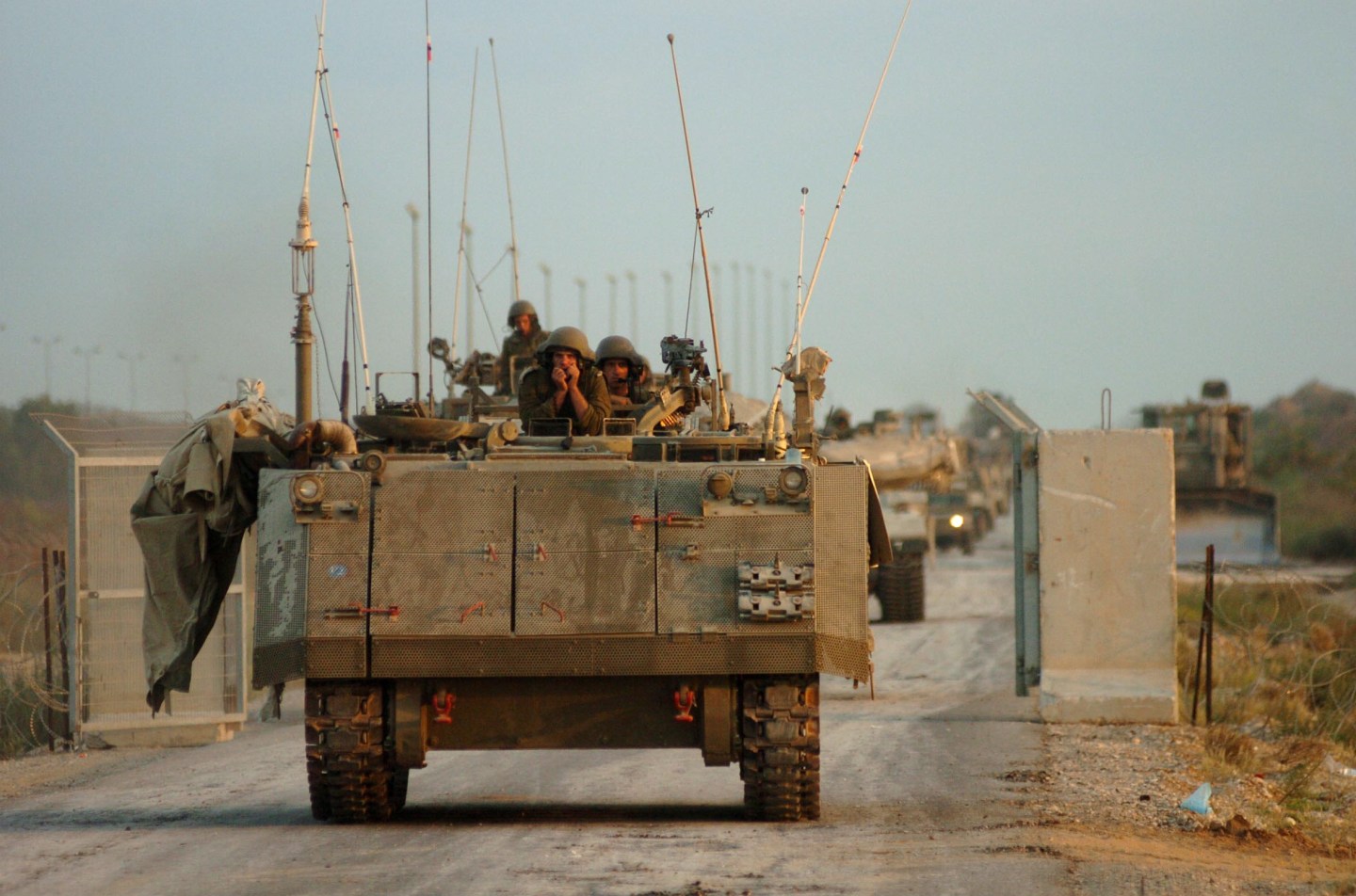
Photo: IDF forces exit the Gaza Strip as part of Operation Last Dawn, the final stage of the Gaza Disengagement, which occurred in the summer of 2005, IDF photo.
 Encyclopedia Geopolitica

2 comments
Comments are closed.